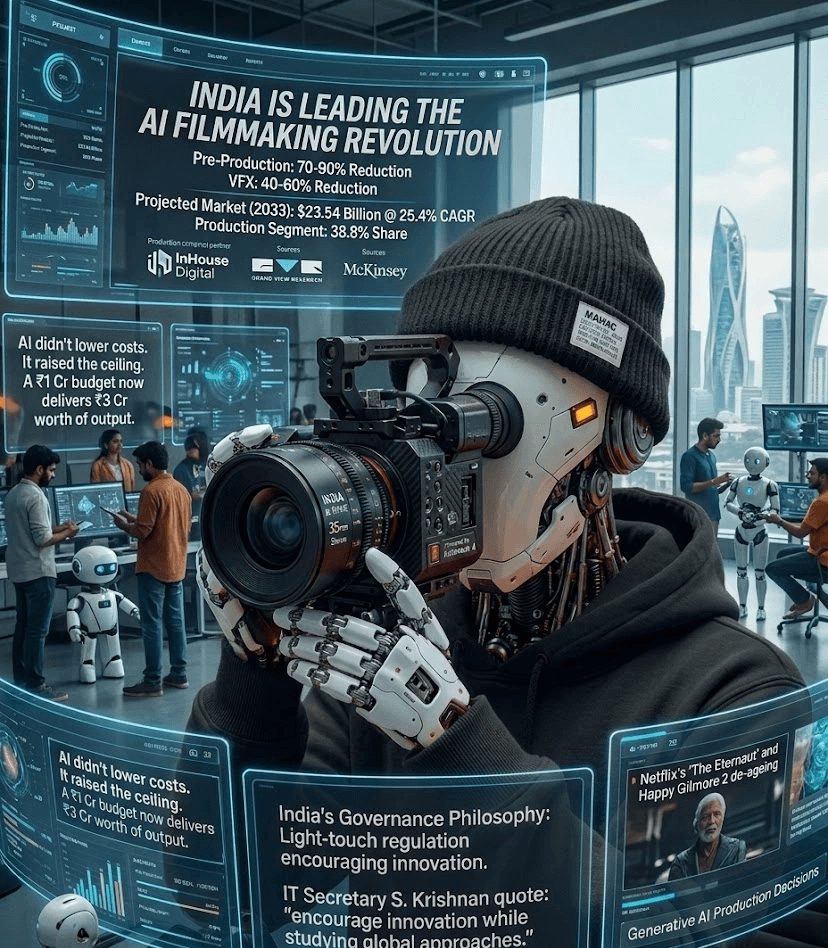
India Is Leading the AI Filmmaking Revolution — Here's What the Global Market Says
AI has made India leader in Filmmaking and its predicted to settle no where in the near future.
The Global Market — What the Projections Say
The AI filmmaking market is growing at a pace most industries would find difficult to comprehend.
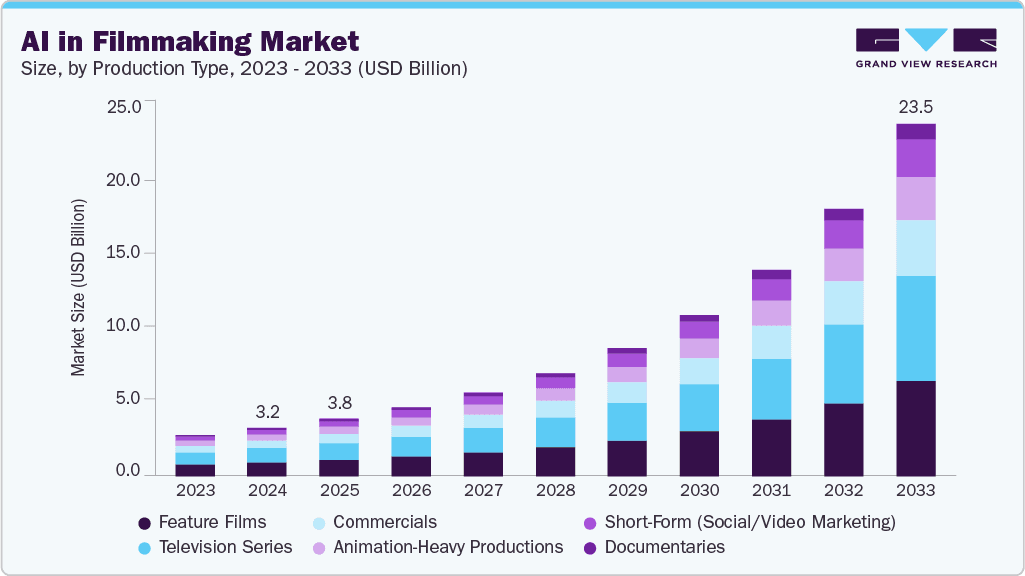
Source: https://www.grandviewresearch.com/industry-analysis/ai-filmmaking-market-report
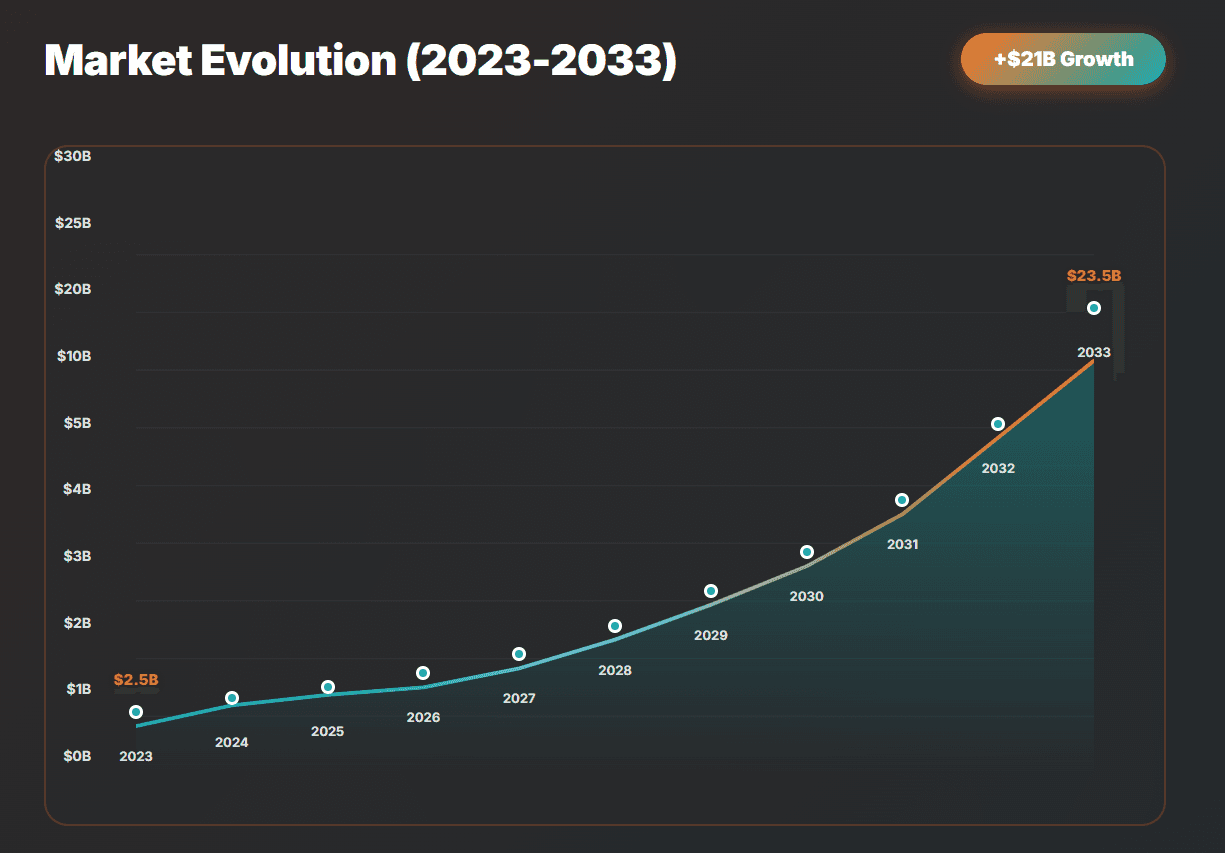
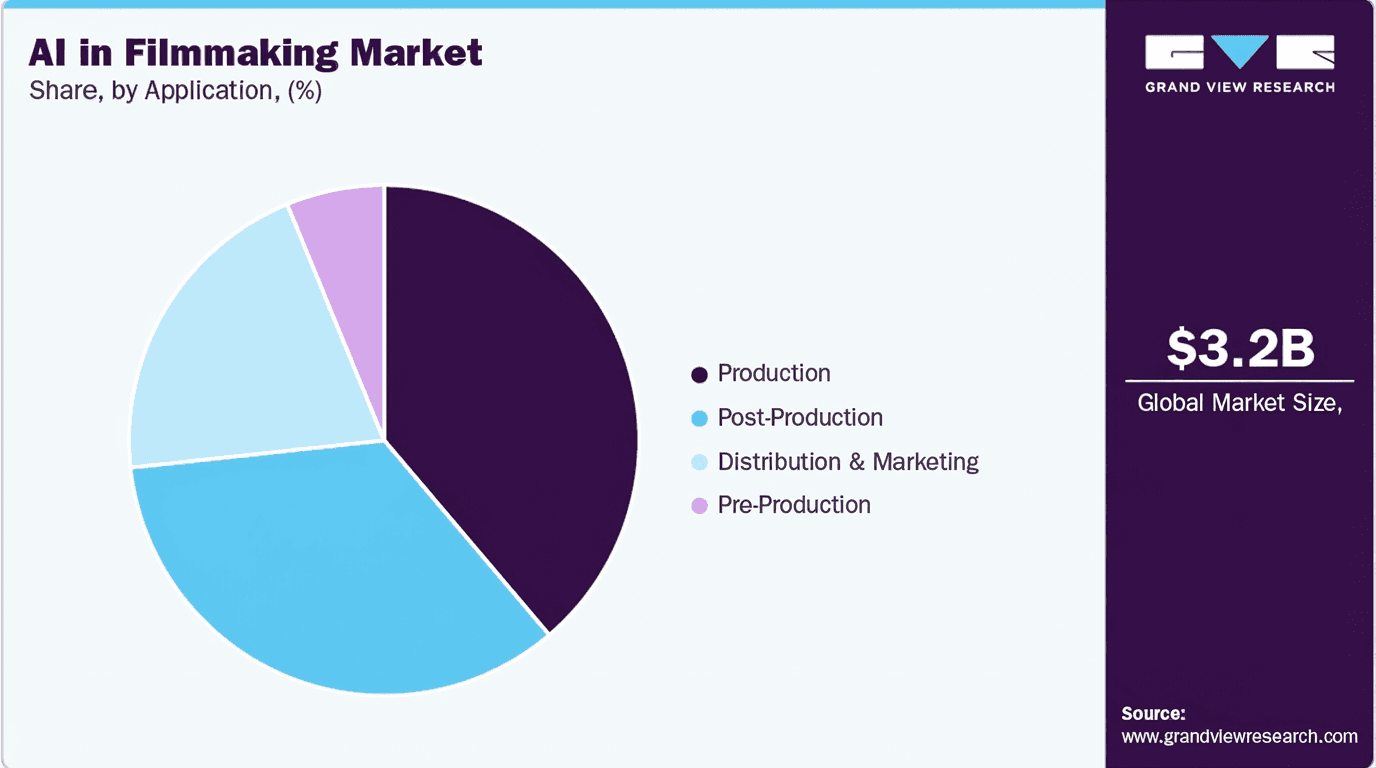
$3.84 billion — AI filmmaking market in 2025 $23.54 billion — projected by 2033 at 25.4% CAGR 38.8% — share held by the production segment (VFX, compositing, editing) — the largest slice Source: Grand View Research
$3.9 billion — feature film AI production segment alone by 2030, growing at 28% CAGR — the fastest growing sub-segment Source: Global Industry Analysts
$10 billion — US original content spend in 2030 that will be addressable by AI — roughly 20% of total content expenditure. As Sean Bailey of B5 Studios put it: every single piece of the workflow from ideation to distribution will be significantly disrupted. Source: McKinsey, January 2026
$99.5 billion — broader media and entertainment AI market by 2033 at 24.2% CAGR
Source: strategyr.com
Legacy Brands Are Already Inside This Shift
This is not a future conversation. The brands you know have already moved.
Netflix used generative AI in final footage for the first time in the Argentine series The Eternaut, creating a building collapse scene that would have been prohibitively expensive with traditional effects. The filmmakers behind Happy Gilmore 2 used generative AI for de-ageing in the opening scene. Billionaires' Bunker used it as a pre-production tool for wardrobe and set design.
Netflix also acquired InterPositive, an AI filmmaking company founded by Ben Affleck which builds technology to streamline production workflows while maintaining human creative integrity. An acquisition is not a test. It is a commitment. Sources: TechCrunch, Fortune, Hollywood Reporter India
These are production decisions by some of the most commercially rigorous companies in the world. Not experiments. Decisions.
What This Means — The Cost Reality
Here is the part nobody puts in the brief honestly.
Stage | Traditional Cost | AI Projection 2026–2030 |
|---|---|---|
Pre-Production | High — manual storyboarding, recce | 70–90% reduction via AI visualisation |
VFX and Cleanup | Massive — frame-by-frame labour | 40–60% reduction via AI compositing |
Dubbing and Localisation | Per-language cost | 80% reduction via AI lip-syncing |
Indie Productions | Multi-crore barriers | 1/10th the traditional budget |
But there are costs on the other side that most agencies won't tell you upfront — prompt engineers, GPU infrastructure, IP and legal clearance on AI-generated likenesses, consistency fixes between frames, governance overhead.
The honest framing: AI didn't lower the floor. It raised the ceiling. A ₹1 crore production budget with the right AI integration can now deliver ₹3 crore worth of output.
India's Governing Philosophy — Why This Moment Is Different
What makes India's position particularly significant is not just the investment. It is the approach.
India has chosen an innovation-first, light-touch governance model — deliberately creating space for the creative and technology sector to build before regulating.
As IT Secretary S. Krishnan (MeitY, November 2025) stated: India has consciously chosen not to lead with regulation but to encourage innovation while studying global approaches.
The only binding AI-specific rule currently: the IT (Intermediary Guidelines) Amendment Rules from February 2026, targeting synthetically generated content labelling. The Digital India Act, expected in 2026, will formalise the broader framework.
Compare this to the EU AI Act mandatory documentation, audits, compliance, fines up to €35 million or 7% of global revenue. India is building while others are regulating.
The Question Worth Asking
70% of consumers globally still say they prefer human-created content over AI. But 42% say both can be equally entertaining. And Gen Z and millennials are leading AI adoption. Source: Variety, 2024
The gap between preference and behaviour is closing faster than most brands realise.
The question for every brand in India right now is not whether AI will change how you make content. That decision has already been made by the market, by the investment, by the technology itself.
The question is whether you are building the understanding now so that when the options expand, you make good decisions instead of expensive mistakes.
The window to lead rather than follow is open. But it will not stay open indefinitely.
InHouse Digital is a narrative-first creative agency working at the intersection of strategy, content, and technology. We delivered a fully AI-generated brand film for Tata Steel's global leadership summit in Abu Dhabi — in 10 days, no crew, no location shoot. If you are evaluating AI production for your next project, we would like to have that conversation.
→ Write to us at contact@inhousedigital.in or visit inhousedigital.in
Sources:
grandviewresearch.com (AI filmmaking market projections)
mckinsey.com (Content spend projections, Jan 2026)
strategyr.com / marketresearch.biz (Market size data)
TechCrunch / Fortune (Netflix AI usage)
Hollywood Reporter India (Netflix InterPositive acquisition)
MeitY / indiaai.gov.in (AI Governance Guidelines)
Variety 2024 (Consumer preference data)